




Knowledge About Die Casting, Machines and Foundry Technology
The FISS Knowledge Center provides practical technical articles on die casting machines, casting processes, automation, furnace technology and process optimization. We explain technical relationships clearly and show which machines, systems and peripheral equipment are suitable for different production requirements.
From cold chamber and hot chamber die casting to mold filling and vacuum, automated die casting cells and molten metal supply, the articles combine technical fundamentals with practical experience from industrial machinery and foundry applications.
Knowledge
Filter products
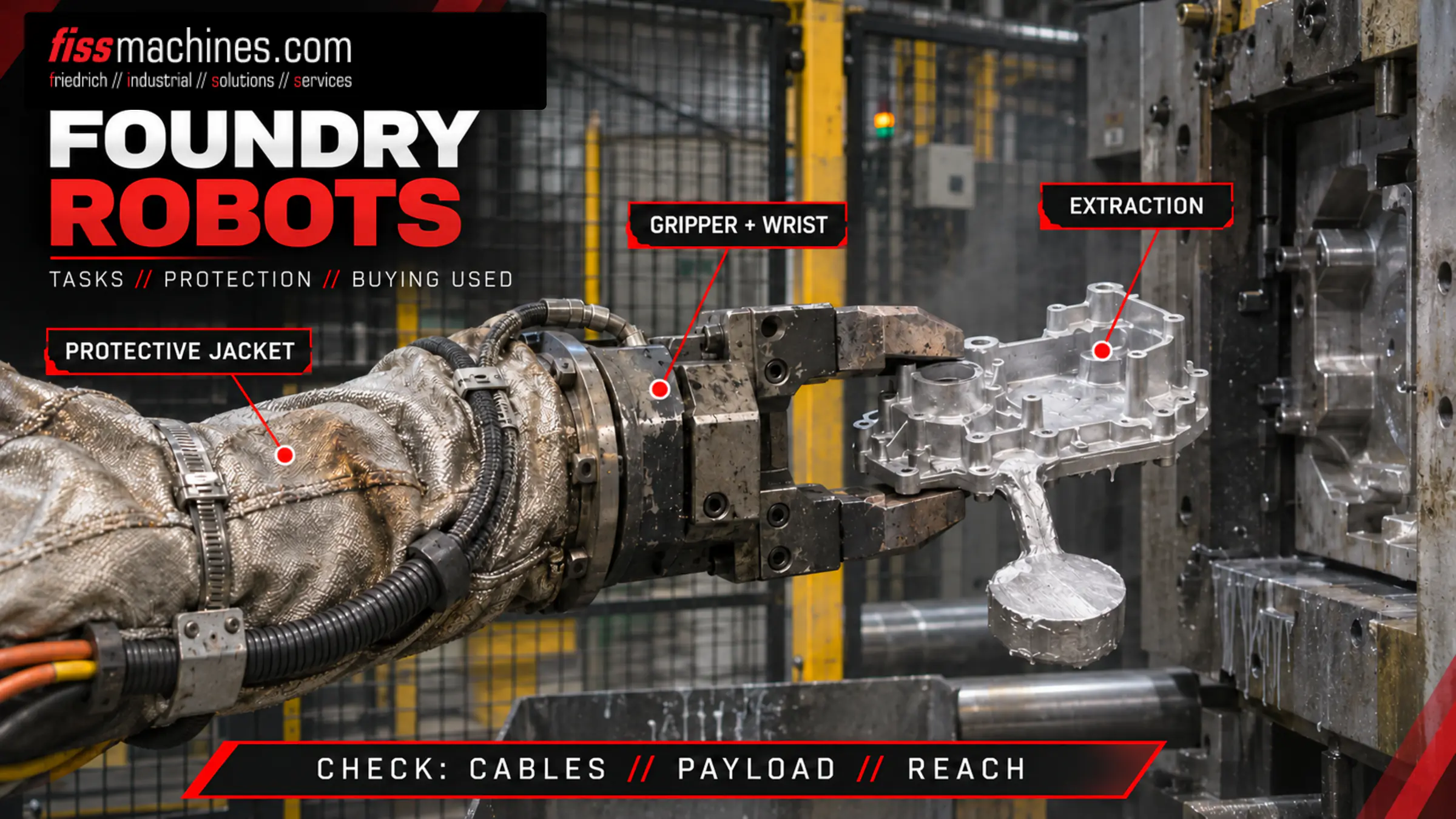
Foundry Robots in Die Casting Cells: Tasks, Protection and Buying Used
November 23, 2026
Knowledge
Extraction, ladling, spraying or press loading: what a foundry robot in a die casting cell must withstand, how to size payload and reach, and what to check before buying a used robot.
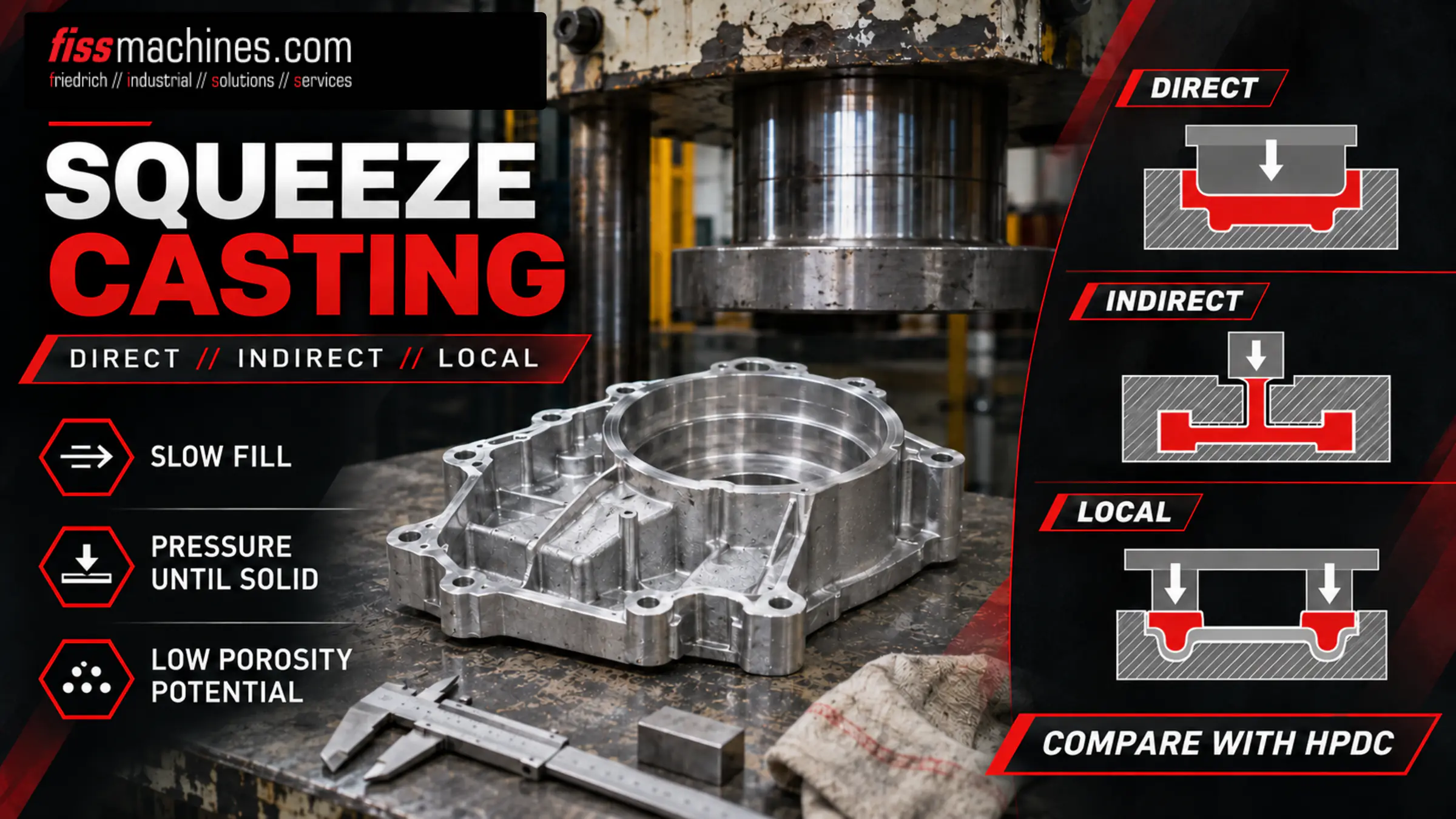
Squeeze Casting Explained: Direct, Indirect and Local Squeeze Compared with HPDC
November 22, 2026
Knowledge
Slow, calm filling and high pressure until the part is solid: how direct and indirect squeeze casting work, what local squeeze pins do in HPDC dies, and when the process beats conventional die casting.
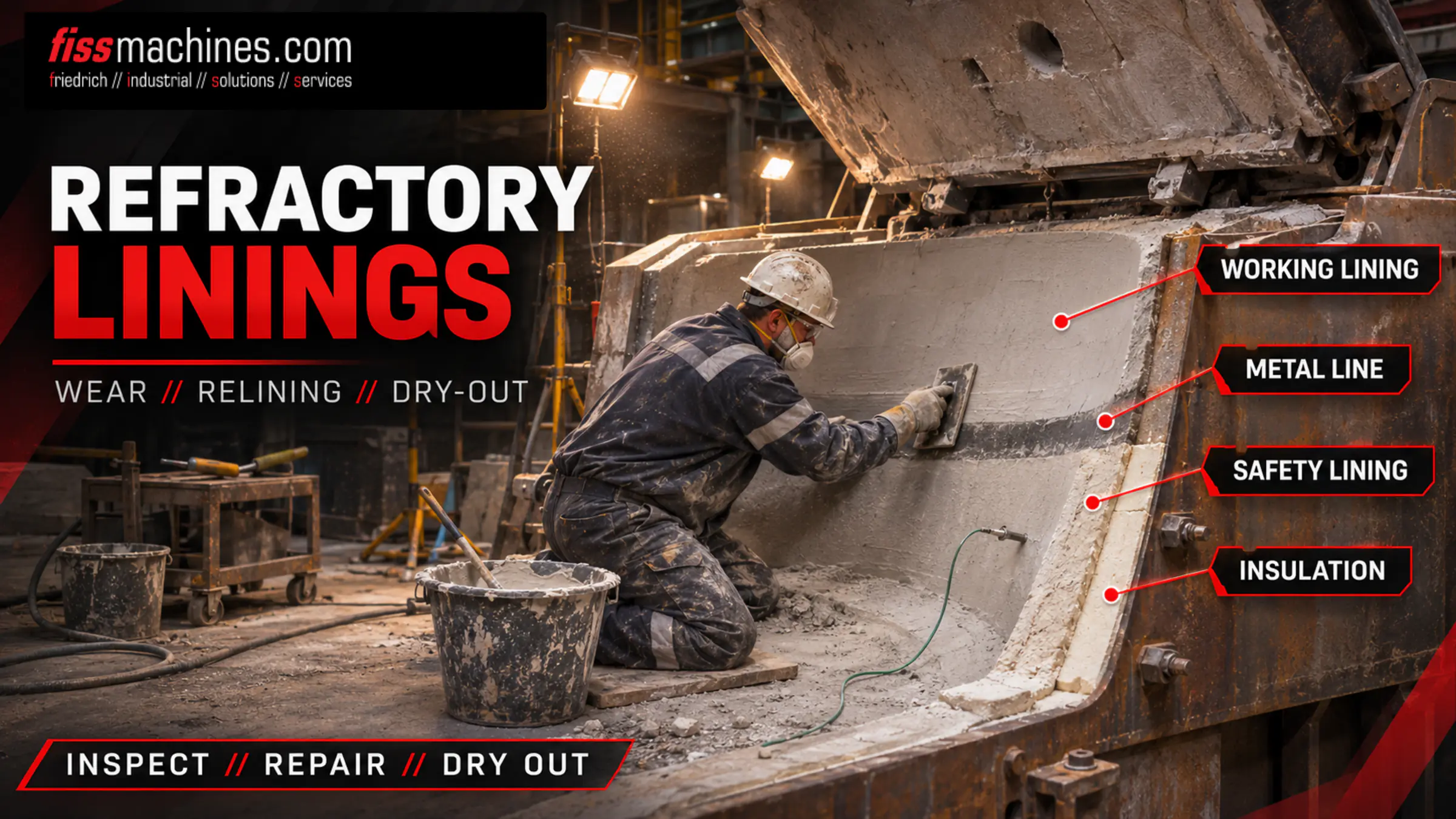
Refractory Linings in Aluminium Furnaces: Wear, Relining and Dry-Out
November 21, 2026
Knowledge
Corundum, metal infiltration and cleaning damage decide how long an aluminium furnace lining lasts. This article explains wear, repair or relining, dry-out and how to judge the lining of a used furnace.
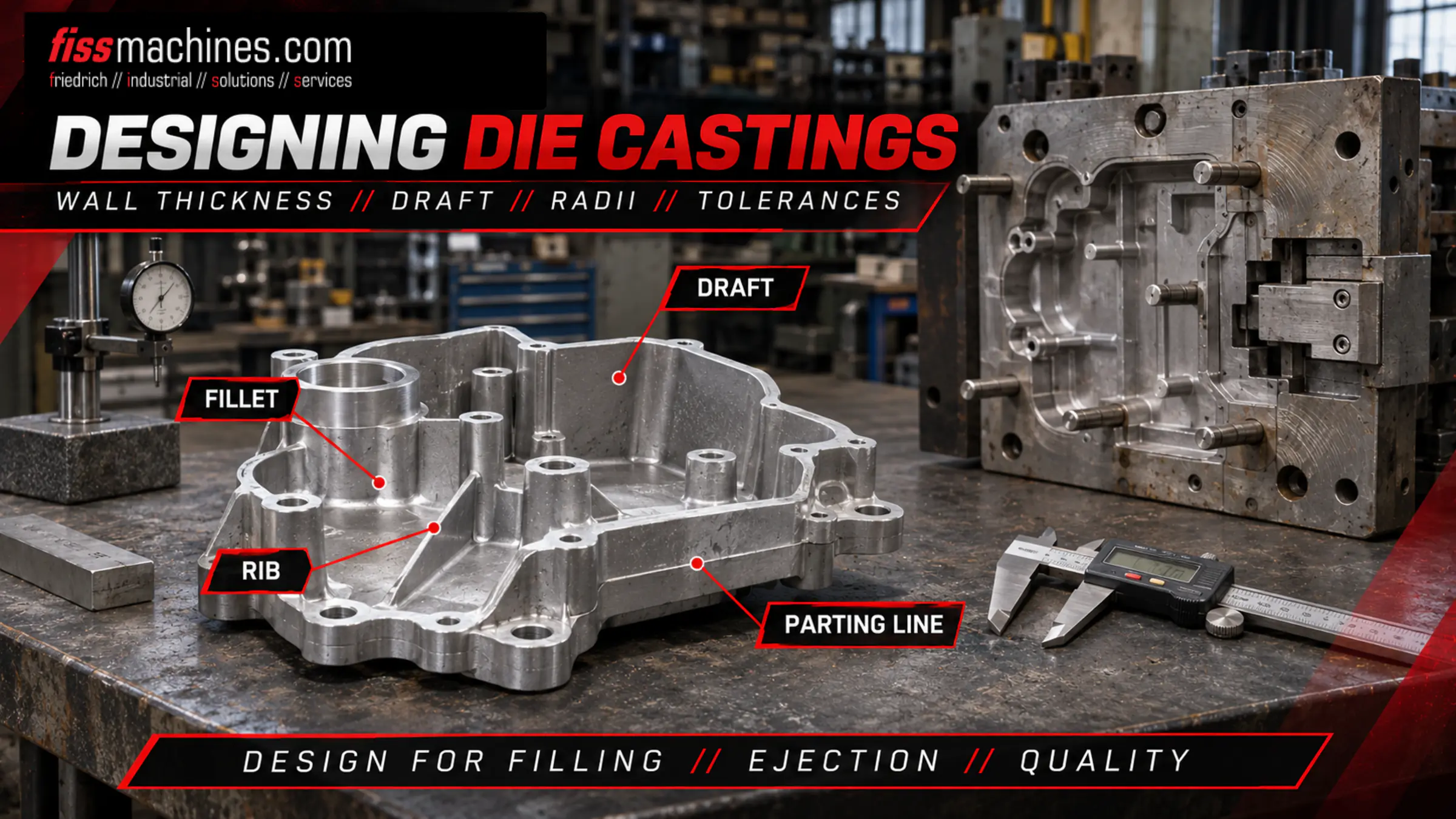
Designing Die Castings: Wall Thickness, Draft Angles, Radii and Tolerances
November 20, 2026
Knowledge
Most cost and quality problems of a die casting are fixed on the drawing. Rules for wall thickness, draft, radii, ribs, parting line, machining stock and tolerances to NADCA and ISO 8062-3:2023.
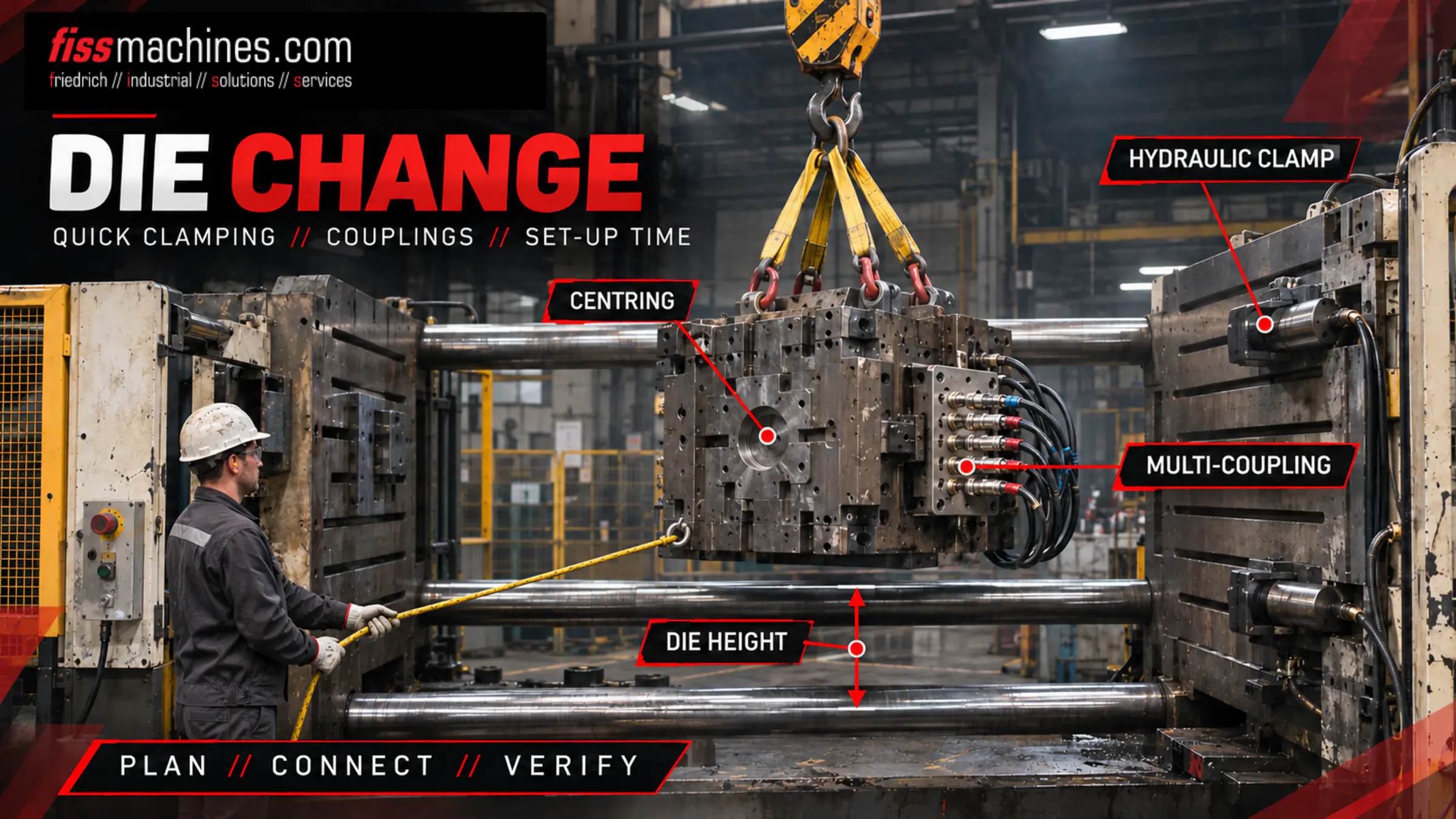
Die Change in Die Casting: Quick Die Change, Clamping Systems and Set-up Time
November 19, 2026
Knowledge
A die change stops the cell for hours. This article explains SMED logic, the change-over sequence, die clamping systems, multi-couplings and preheating – and what to check on a used machine.
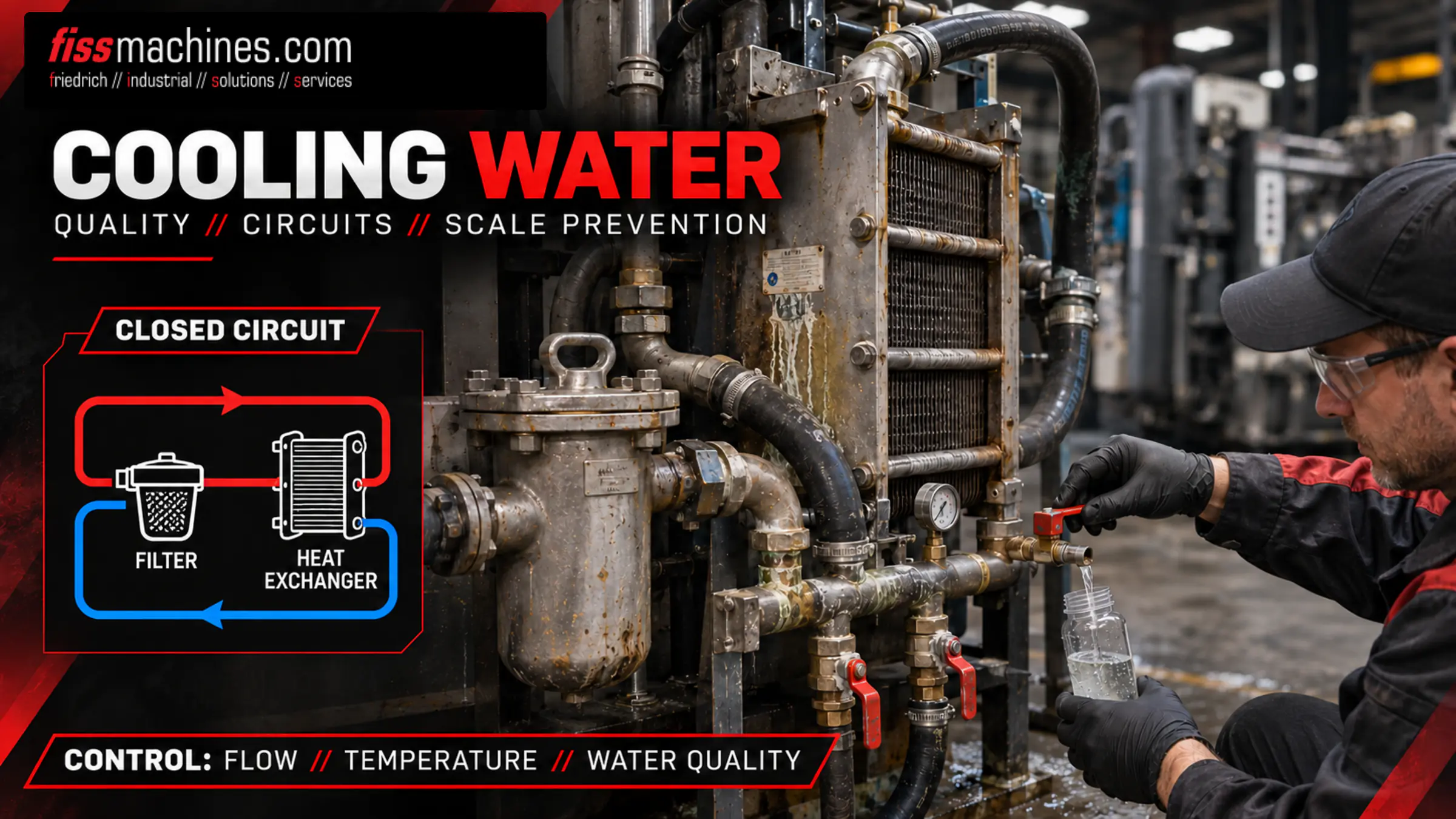
Cooling Water in Die Casting: Water Quality, Circuits and Scale Prevention
November 18, 2026
Knowledge
Dies, shot sleeves, oil coolers and furnaces all depend on the plant cooling water. This article explains circuits, water quality, scale prevention and hygiene rules for evaporative cooling.
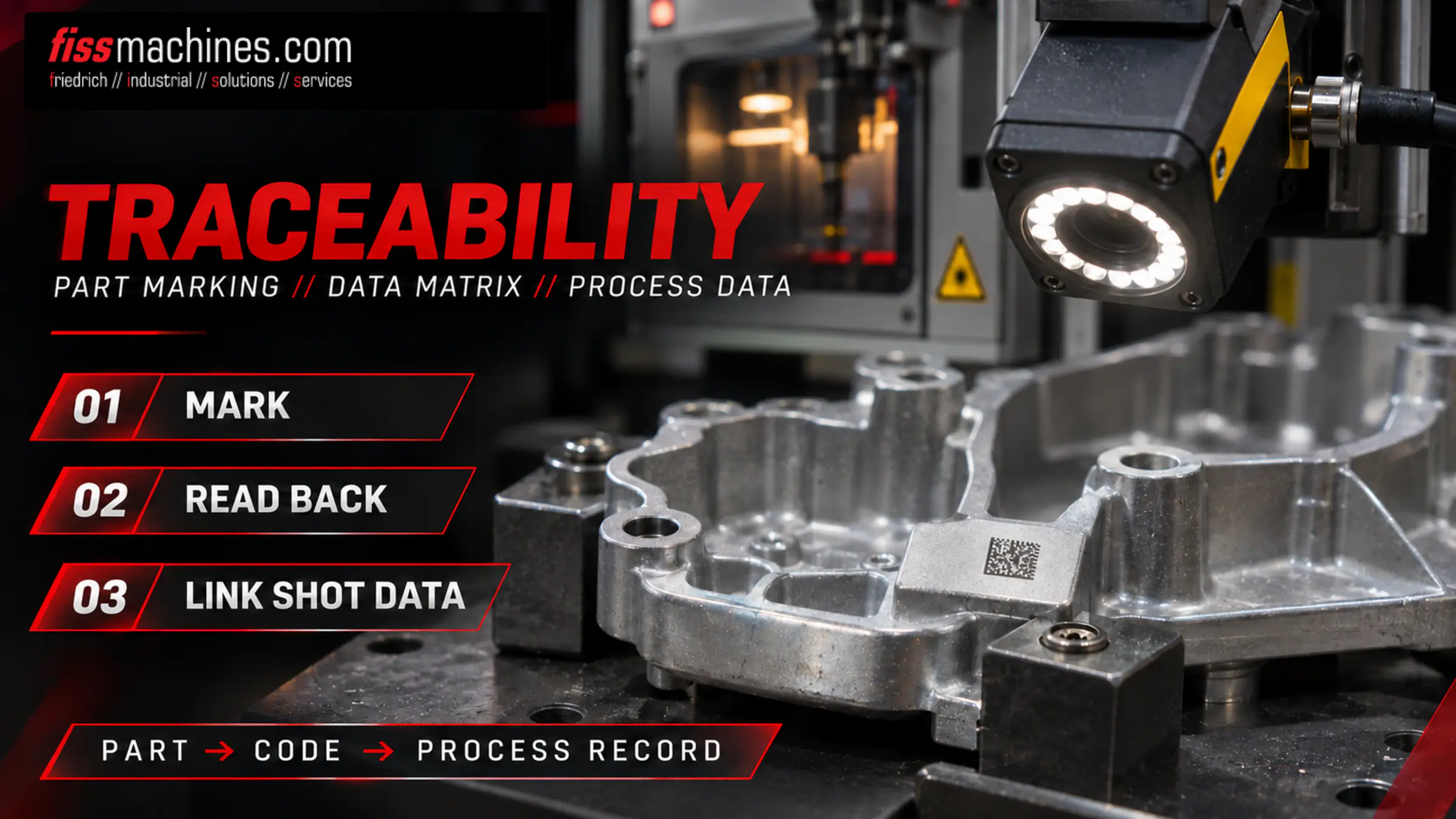
Traceability in Die Casting: Part Marking, Data Matrix Codes and Process Data
November 17, 2026
Knowledge
Which casting came from which shot, melt and die? This article explains marking methods, Data Matrix codes, code verification and how process data is linked to each part – also on older machines.
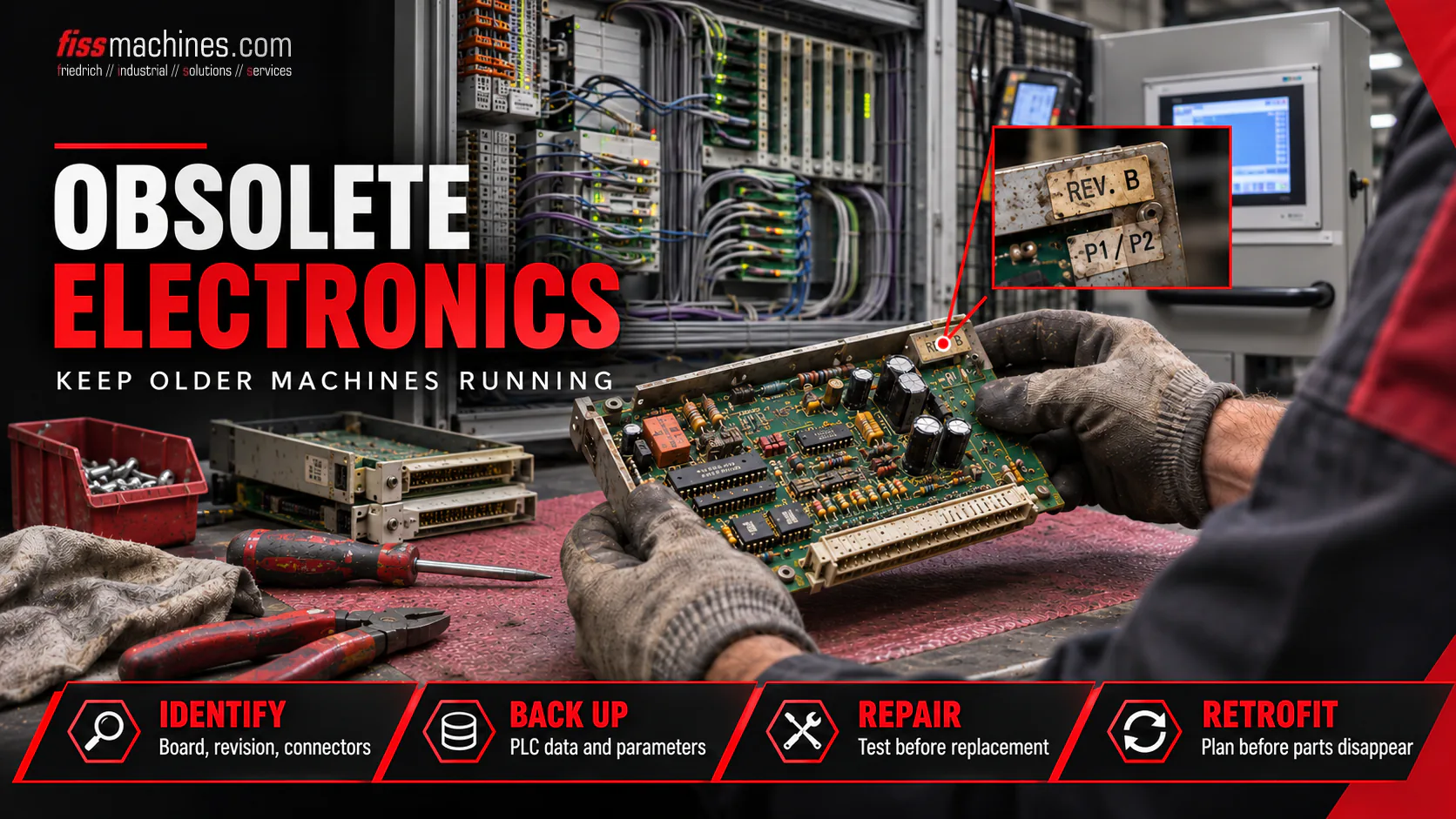
Electronic Spare Parts for Older Foundry Machines: Plug-in Boards, Obsolescence and Repair
November 16, 2026
Knowledge
The mechanics of an older die casting machine often last for decades – the control electronics do not. This article shows how foundries assess obsolescence, secure spare parts and plug-in boards, and when a retrofit becomes unavoidable.
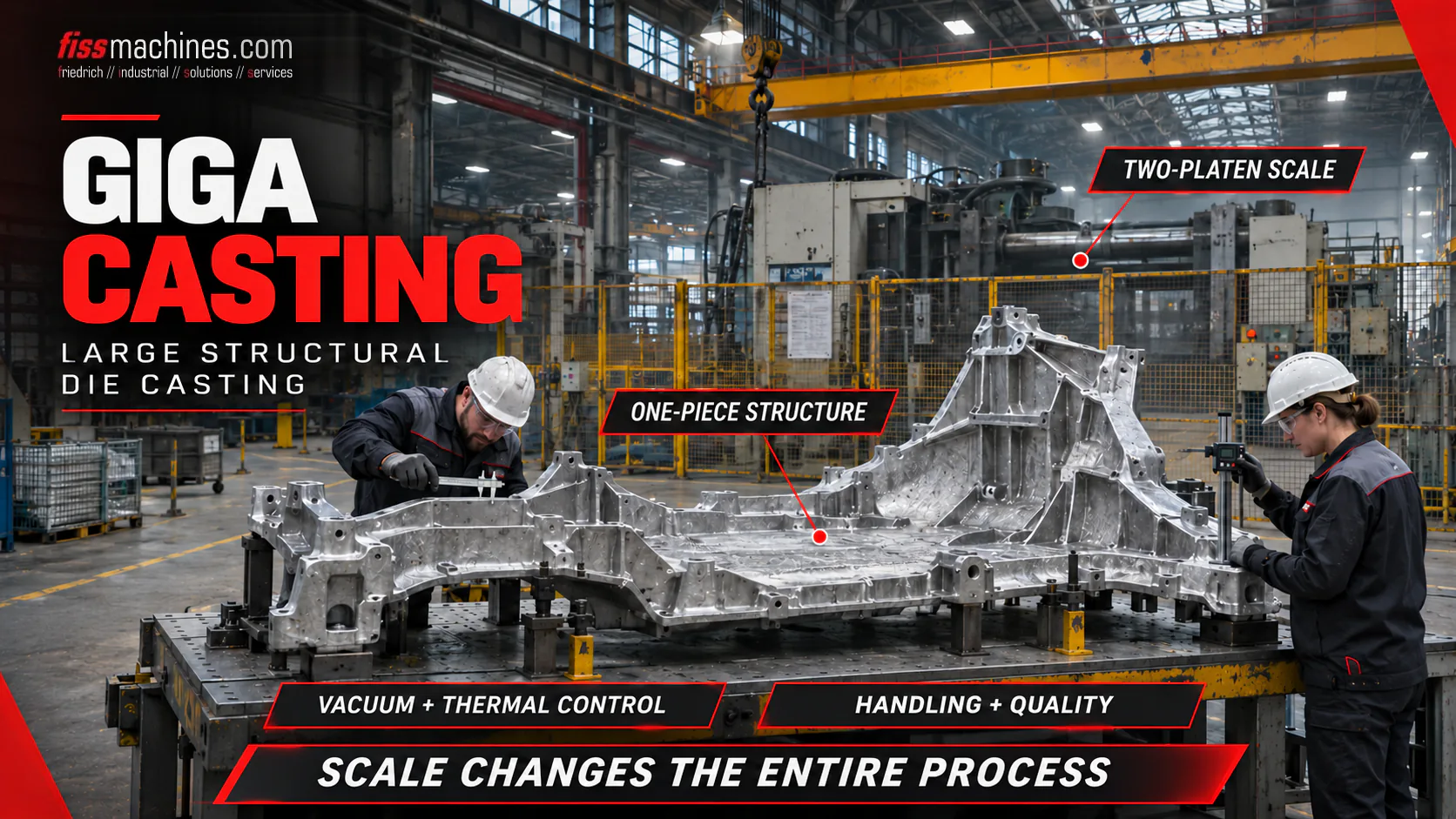
Giga Casting: Large Die Casting Machines for Structural Parts – Technology and Limits
November 15, 2026
Knowledge
Giga casting replaces dozens of joined body parts with one die casting. This article explains machine sizes, process requirements, quality and repair questions – and who the technology really suits.
