




Fume Extraction in Die Casting: Release Agent Aerosols, Capture Hoods and Filters
Release agent hits a hot die, metal is ladled into the shot sleeve, hydraulics run around the clock: a die casting cell produces mist, smoke and vapours with every cycle. Without targeted extraction these emissions spread into the hall, settle on machines and roofs and burden the people working there.
What Is Die Casting Fume Extraction?
Die casting fume extraction is the capture of release agent aerosols, oil smoke and process vapours directly at the die casting machine and their separation in a filter system. The cleaned air is returned to the hall or discharged outside.
A system has three parts: a capture element (hood or enclosure), a separator (electrostatic precipitator or mechanical filter) and a fan with control.
Where Emissions Arise in a Die Casting Cell
The largest emission source in a die casting cell is die spraying. Spray pattern and release agent quantity are covered in Die Spraying in Die Casting; for extraction, what matters is what happens to the release agent after the nozzle.
Release Agent Mist
Part of the atomised spray never reaches the hot die and drifts away as fine aerosol and water vapour.
Smoke and Decomposition Products
Release agent components evaporate and partly burn on the hot die and during filling. The smoke rises with the thermal updraft.
Oil Mist and Lubricants
Leaks, plunger lubrication and lubricated die points add oil mist and vapours near hot surfaces.
Furnace and Ladling
Holding furnaces, ladling and dross handling release fumes and dust. With magnesium, fire protection becomes central.
KMA Umwelttechnik states that conventional spraying applies around 3 litres of mixture per cycle with roughly 25–30 ml of release agent, oil-based minimum-quantity spraying 30–50 ml – and that the oil smoke from the release agent remains in both cases (manufacturer statement).
How Release Agent Aerosols and Process Mist Form
Water-based release agents are emulsions or dispersions of water and active ingredients such as waxes, silicones or polymers. During spraying the jet breaks up into droplets of different sizes. On the hot die surface the water evaporates instantly and the active ingredients form the release film. Air contaminants arise in three ways:
- Overspray: droplets that miss the die or bounce off it stay airborne as mist.
- Steam and condensate: the evaporating water carries fine droplets with it and condenses on cooler surfaces – including hoods, ducts and filters.
- Thermal decomposition: organic components evaporate or decompose on the hot die and on contact with the melt. The result is smoke with very fine particles that rises with the thermal plume.
For extraction this means: the emission is cyclic (peaks during spraying and die opening), wet and sticky. Every millilitre of release agent that is not sprayed does not have to be extracted – an optimised spray process is often the cheapest first measure.
Capture Concepts: Hood, Enclosure or Hall Ventilation
Emissions are easiest to capture where they arise and are still concentrated. Once die casting smoke has mixed with the hall air, far larger air volumes are needed for the same effect.
| Concept | How It Works | Strengths | Limitations |
|---|---|---|---|
| Hood above the machine | Canopy hood over the die area, one- or two-piece, sometimes movable | Uses the thermal updraft; movable designs allow crane access | Side drafts and open doors reduce capture |
| Enclosed cell | Die area and periphery largely enclosed | High capture with smaller air volume | Access for die changes and maintenance must be planned |
| Capture at the spray head | Local extraction near the spray tool | Captures mist before it disperses | Complex; must not disturb spray pattern or robot paths |
| Hall ventilation only | Roof fans or general air exchange | Simple installation | High air changes; emissions pass the breathing zone |
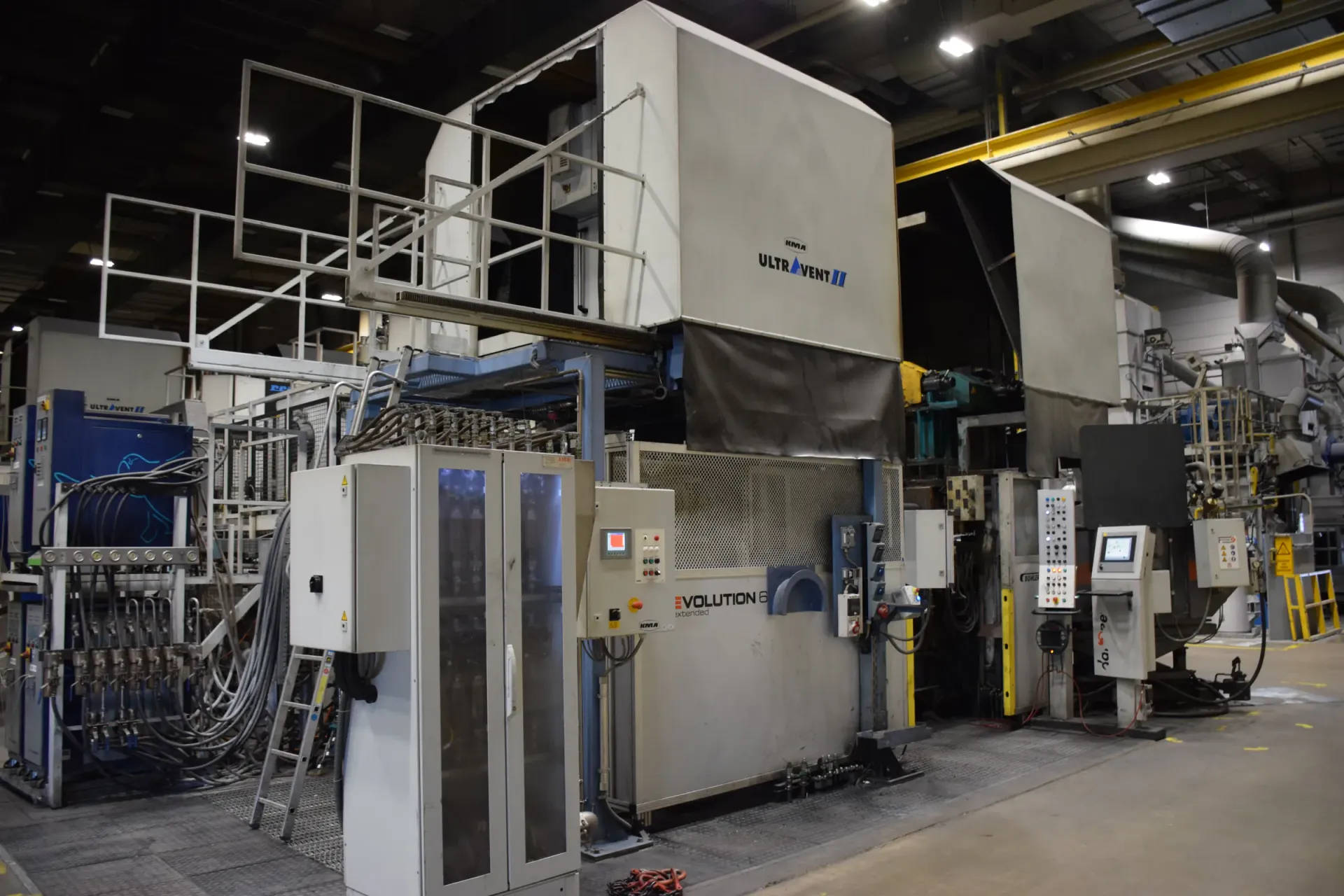
Keller Lufttechnik describes canopy hoods above die casting machines as the most effective and economical capture method because they use the thermal updraft (manufacturer statement). Hoods and enclosures are often combined with the cell guarding described in Automation in the Die Casting Cell.
Local Extraction or Hall Extraction?
Local exhaust ventilation (capture at the source) extracts at the hood, enclosure or spray head while the emission is still concentrated. Air volumes stay manageable, the separator works with a defined load and the contaminants never reach the breathing zone. Hall extraction or general ventilation only dilutes: the emissions first travel through the hall, settle on the roof and crane runway, and the same effect needs far larger air volumes – and heating energy.
General ventilation is still needed for make-up air, heat removal and residual emissions. It complements local extraction but does not replace it. Occupational safety rules follow the same order: in Germany, TRGS 500 describes capture at the point of origin as the priority ventilation measure ahead of general room ventilation.
Positioning Capture Hoods Correctly
- Mount the hood as close above the die and parting area as the crane, die changes and spray robot allow – every metre of distance increases the required air volume.
- Make the hood larger than the thermal plume above the open die; side curtains or louvres guide the smoke into the hood and weaken cross-drafts.
- Provide movable, split or hinged hood sections if dies are changed with the overhead crane.
- Include the shot sleeve, dosing furnace, extraction and trimming press – smoke and oil mist arise there too.
- Avoid cross-drafts from doors, hall fans and cooling blowers; introduce make-up air with low momentum.
- Plan platforms, ladders and inspection openings for cleaning and filter maintenance from the start.
- Verify capture after commissioning with a smoke test and measurements, not just on paper.
Separation Technologies for Release Agent Aerosols
Release agent aerosols are fine, sticky and often mixed with water vapour. The IFA, the occupational safety institute of the German Social Accident Insurance, distinguishes inertial, filtering and electrostatic separators.
| Technology | Principle | Typical Use | Points to Watch |
|---|---|---|---|
| Inertial separator / demister | Gravity, inertia or centrifugal force | Pre-separation of larger droplets | IFA: at best a pre-separator |
| Mechanical filter | Porous medium retains droplets and particles | Oil mist and smoke, also as final stage | IFA: good for aerosols, ineffective for vapours; media must be replaced |
| Electrostatic precipitator | Particles are charged and deposited on collecting electrodes | Fine oil and release agent mist, smoke | Low pressure drop; electrodes need cleaning; water films can cause flashovers (IFA) |
| Combined system | Pre-separator plus main stage | Mixed emissions with water vapour | More components, each stage in its suitable range |
Maintaining the Filter System: What Matters in Operation
An extraction system usually loses performance gradually: deposits raise the pressure drop, dirty electrodes separate less, and the hood captures less without anyone noticing at once. Maintenance intervals should be derived from the manufacturer's documentation and your own operating experience, and documented.
- Electrostatic filters: clean ionisation and collector sections or check the automatic washing system; keep insulators clean and dry; monitor voltage readings and flashovers.
- Mechanical filters: monitor differential pressure and change filter media as specified by the manufacturer, not only when smoke becomes visible.
- Separated material: drain the oil-water mixture and condensate regularly and dispose of it properly.
- Hoods and ducts: inspect and clean deposits – they are a fire load and a sign of capture problems.
- Fan and drive: check bearings, belts, impeller and vibration; test speed control and the link to the machine cycle.
- Effectiveness: measure air flow and capture at fixed intervals and compare with the commissioning state.
What Filter Manufacturers State About Die Casting Extraction
Two German suppliers illustrate the range. The points below are manufacturer statements from their own websites (accessed 6 November 2026), not independent test results.
Electrostatic Filter with Hoods
ULTRAVENT III: modular electrostatic filter, hoods from one-piece to movable, automatic cleaning in place, recirculation or exhaust mode, heat recovery, fan speed synchronised with the spraying cycle.
Two Separator Types
eLine electrostatic separator for adhesive aerosols with clean air recirculation; ENA mist separator for water-soluble spraying agents. Both with rinsing units.
Recirculating cleaned air instead of exhausting it reduces the heat that is lost with the exhaust air in winter; how much energy this saves depends on the hall, operating hours, climate and the permitted recirculation share and should be calculated for the specific plant.
Design Factors for a Die Casting Extraction System
- Air volume: follows from hood size, open area and capture velocity. Too little lets smoke escape; too much costs energy.
- Capture velocity: must overcome side drafts from doors, fans and cranes. Values come from the manufacturer’s design, not rules of thumb.
- Makeup air: every cubic metre discharged outside must flow back in – ideally tempered, not as a draught that disturbs the hoods.
- Recirculation and heat recovery: returning cleaned air retains heating energy (see Energy Efficiency in Die Casting). VDI 2262 Part 3 (2011-06, listed as current by DIN) covers ventilation measures at the workplace; whether recirculation is permissible must be assessed for the substances involved.
- Control: fans that follow cycle or shift save energy compared with constant full load.
Typical Design Errors in Die Casting Machine Extraction
Many extraction systems work perfectly from a technical point of view and still capture too little. The causes almost always lie in the planning:
Hood Too High or Too Small
To keep clear of the crane, the hood is mounted far above the die. The thermal plume widens and cross-drafts carry the smoke past the hood.
Make-Up Air Forgotten
If more air is exhausted than can flow back in, negative pressure builds up: doors draw air, draughts disturb capture and energy is lost.
Steam Underestimated
Condensate in ducts and filters causes flashovers in electrostatic filters, corrosion and dripping water. Duct slopes, drains and pre-separators belong in the design.
Long Ducts Without Access
Many bends raise the pressure drop; missing cleaning openings make deposits invisible – and turn them into a fire load.
Spray Process Not Aligned
The system is sized for today's release agent quantity without checking whether spraying can be reduced. That makes it larger than necessary.
No Acceptance Test, No Maintenance Budget
Without measurements after commissioning and defined maintenance, neither the effect can be proven nor its decline detected.
Practical Checklist for Planning or Assessing Extraction
Record the Emission Situation
Release agent and quantity, alloy, cycle time, machine size, furnace position, visible smoke and deposits.
Choose the Capture Concept
Hood, enclosure or local capture – considering crane access, die changes and robot paths.
Select the Separation Technology
Pre-separation, main stage, handling of water, condensate and collected oil.
Define the Operating Mode
Recirculation or exhaust, heat recovery, makeup air and control.
Plan Maintenance and Verification
Cleaning intervals, fire protection, documentation and an effectiveness measurement after commissioning.
Occupational exposure limits and the applicable national rules on hazardous substances decide whether a solution is sufficient. This article gives no compliance advice; the assessment belongs in the operator’s risk assessment, supported by occupational safety specialists or the responsible authority.
Retrofitting Extraction on Existing Die Casting Machines
In many foundries extraction is not planned together with a new cell but added to a running die casting machine. The hall, the crane and the existing peripherals then determine what is possible. These points should be clarified before asking a filter manufacturer for a quote:
| Criterion | What to check | Why it matters |
|---|---|---|
| Hall height and crane | Crane hook height, die height during changes, clearance above the machine | Determines the possible hood position and whether movable hood sections are needed |
| Support structure | Separate steel frame or mounting on the machine, foundation, vibration | Hood, filter and platform add considerable loads; the machine must not be affected |
| Peripherals | Spray robot, extraction, dosing furnace, trimming press, safety fencing | Hood and ducts must not block motion paths or maintenance access |
| Filter location | On the hood, beside the machine, on the roof or outdoors | Affects duct length, pressure drop, maintenance access and the option to recirculate |
| Power and signals | Power supply, machine enable and cycle signal, emergency stop, fire alarm | Enables cycle-dependent fan control and safe shutdown |
| Exhaust or recirculation | Whether recirculation is permitted, heat recovery, discharge to atmosphere | Decides the energy balance and possible regulatory requirements |
Selection and Retrofit Criteria at a Glance
- Measure or document the emission situation (release agent quantity, cycle time, visible smoke, deposits)
- Walk through a die change with the crane at the planned hood
- Choose a separation technology for wet, sticky aerosols; check pre-separation
- Provide a link to the machine control and cycle-dependent fan control
- Have fire protection, cleaning and access included in the quotation
- Agree on an effectiveness measurement as an acceptance criterion
A retrofit combines well with a machine modernisation; see Overhaul or Retrofit of Used Foundry Machines. For furnaces and dosing, see Dosing, Melting or Holding Furnace.
Buying or Relocating a Used Extraction System
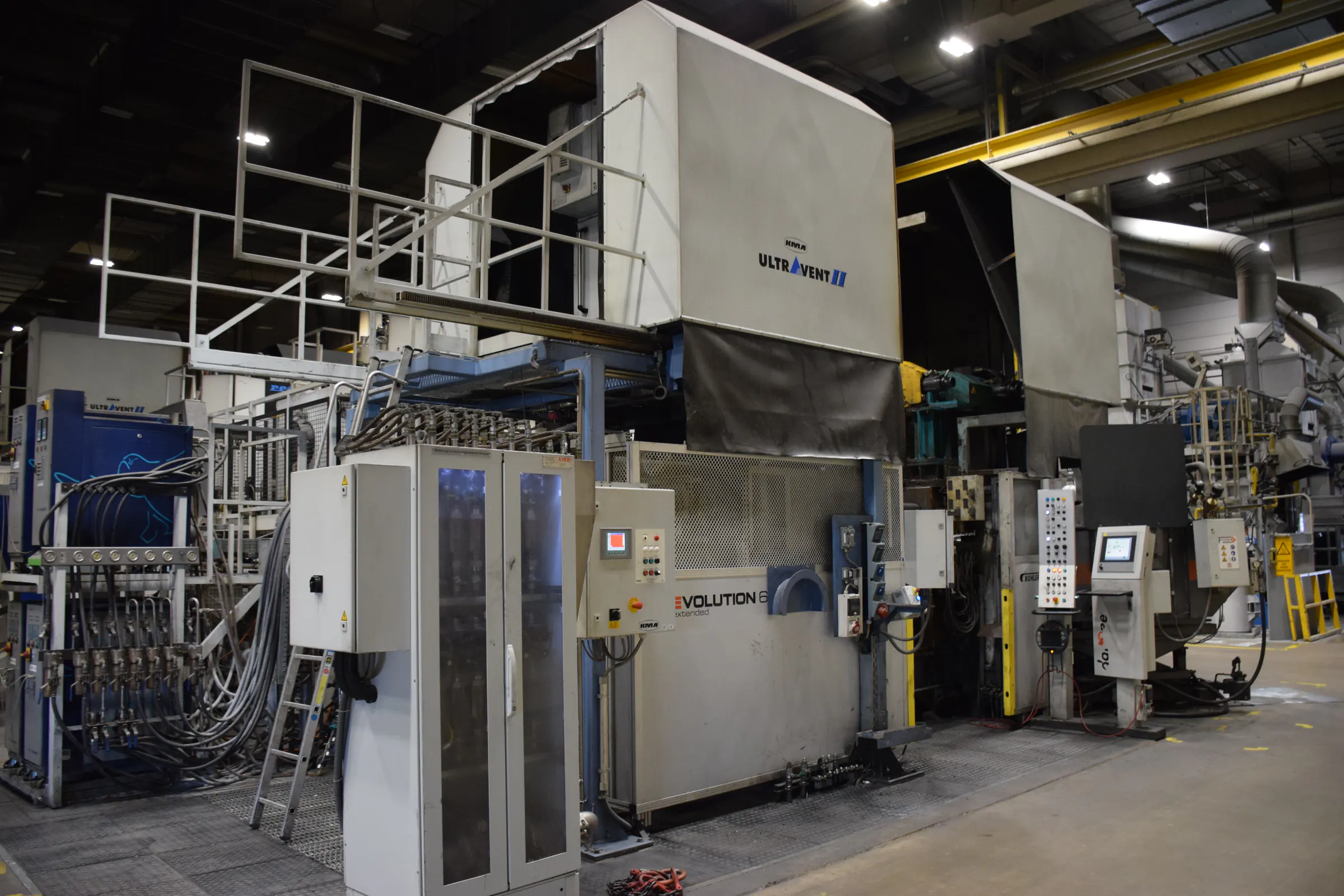
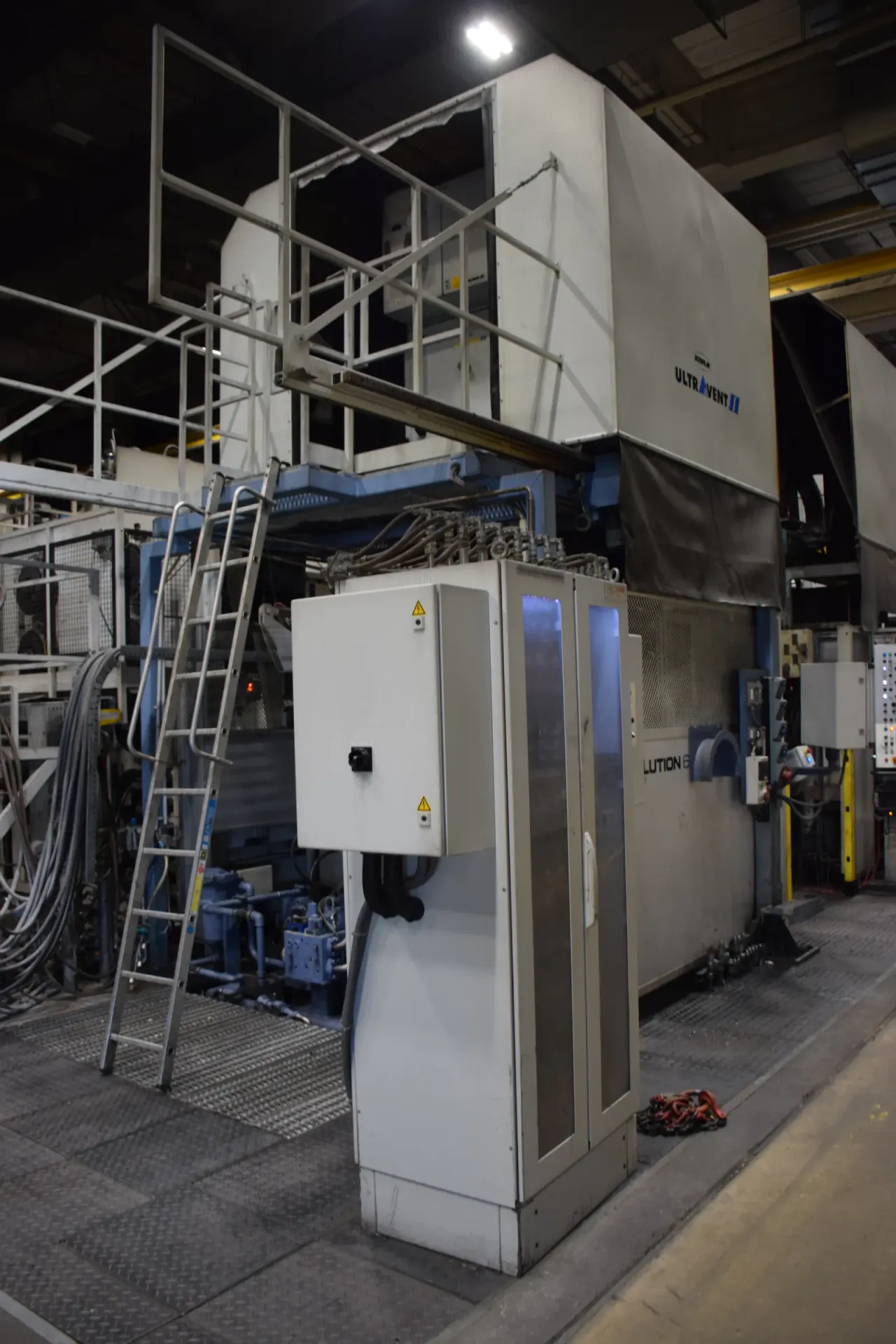
A used extraction system can be economical if hoods, filter capacity and fans match the new cell. FISS has, for example, sold a used KMA UV II extraction system and handled dismantling and loading.
- Type plate data, documentation and wiring diagrams
- Condition of electrodes, high-voltage supply and cleaning system
- Deposits in ducts and hoods – a sign of maintenance quality and fire load
- Fit of hood dimensions and air volume to the target machine
- Spare parts and manufacturer service
Extraction systems need regular care like the machine itself; see Preventive Maintenance of Die Casting Machines.
Clean Air Starts at the Die
Effective die casting fume extraction captures release agent mist and smoke at the source, separates them with a technology suited to sticky, water-laden aerosols and is designed for air volume, makeup air, fire risk and maintenance. Clarify the emission situation first, then choose hood, separator and operating mode with the manufacturer and occupational safety specialists.
Questions About Extraction in Die Casting
Is Hall Ventilation Enough for Die Casting Cells?
Usually not. Without local capture, emissions pass through the working area first and very high air changes are needed. Hoods or enclosures capture smoke while it is still concentrated.
Why Are Electrostatic Precipitators Common in Die Casting?
Electrostatic precipitators separate fine, sticky aerosols with a low pressure drop and need no filter media replacement. Their collecting electrodes must be cleaned regularly, and water in the exhaust air must be handled by the design.
Can Cleaned Air Be Returned to the Hall?
Recirculation saves heating energy and is offered by several manufacturers. Whether it is permissible depends on the substances involved and the applicable rules; the operator should have this assessed by occupational safety specialists.
How low should an extraction hood hang above the die casting machine?
As low as die changes, the crane and the spray robot allow. With increasing distance the thermal plume widens and the required air volume rises. There is no fixed figure; hood height and air volume are designed by the filter manufacturer for the specific machine.
Can extraction be retrofitted to an older die casting machine?
Yes. The key factors are hall height and crane, a separate support structure for hood and filter, free motion paths for peripherals and die changes, and a link to the machine control. Used extraction systems can also fit if hood dimensions and air volume match the machine.
How often does an electrostatic filter need cleaning?
That depends on the release agent quantity, operating hours and design. Many systems have automatic washing; its function, the insulators and the voltage readings should still be checked regularly. The manufacturer's specifications, adjusted to your own operating experience, are decisive.
Used Plants and Peripherals from FISS.
FISS lists used industrial plants including filter and separation systems and supports dismantling, transport and sourcing.
Sources
IFA – Institute for Occupational Safety and Health of the German Social Accident Insurance: lexicon entries Abscheider and Luftrückführung (Praxishilfen Kühlschmierstoffe), dguv.de, accessed 6 November 2026.
VDI 2262 Part 3:2011-06 – Workplace air – Reduction of exposure to air pollutants – Ventilation technical measures; status “current” according to DIN NA 041, din.de, accessed 6 November 2026.
KMA Umwelttechnik GmbH: Exhaust air purification and heat recovery for die casting, kma-filter.de, accessed 6 November 2026 (manufacturer statements).
Keller Lufttechnik GmbH + Co. KG: Die casting – clean air when processing aluminium, zinc or magnesium, keller-lufttechnik.de, accessed 6 November 2026 (manufacturer statements).
FISS Machines: Successful Sale of a KMA UV II 10000 / IEE VVR EWT 10 Extraction System and Die Spraying in Die Casting, fiss-machines.com, accessed 6 November 2026.
German Committee on Hazardous Substances / BAuA: TRGS 500 – Protective Measures and TRGS 900 – Occupational Exposure Limits, baua.de, accessed 19 November 2026.
FISS Machines: Overhaul or Retrofit of Used Foundry Machines and Dosing, Melting or Holding Furnace, fiss-machines.com, accessed 19 November 2026.
Photos: FISS Machines, KMA UltraVent II extraction on a Bühler Evolution extended (2026).
